
What Probate Covers in Quitman County
Probate is the court process that settles what a person leaves behind. In Mississippi there is no separate probate court. The Chancery Court hears these cases as part of its equity work, so every estate in the county runs through Quitman County Chancery Court. The same court also handles divorce, land disputes, and other family and property matters. Probate records, then, are a branch of the larger Chancery Court file system, kept by the Chancery Clerk at the courthouse in Marks.
The work falls into a few clear groups. Some cases prove a valid will and put an executor in charge. Others open when a person dies with no will and the court names an administrator. A separate track protects living people who cannot manage their own affairs. The Chancery Court reviews each filing, appoints the right person, and signs the orders that move the estate toward closing.
Common Quitman County probate matters include the following:
- Wills and testate estates, where a written will is admitted to probate.
- Intestate estates, opened when someone dies without a valid will.
- Guardianships for minors or incapacitated adults.
- Conservatorships that protect a person's money and property.
- Trust matters and equitable disputes filed in Chancery Court.
- Heirship findings, accountings, fiduciary bonds, inventories, and final distributions.
Probate Terms Defined
Probate paperwork is full of old legal words. A short glossary helps you read a Quitman County estate file and ask the clerk the right question. The terms below appear in most petitions, orders, and accountings on record at the Chancery Court.
- Testator
- The person who made the will. A testate estate is one where the testator left a valid will.
- Executor
- The person named in the will to carry it out, collect assets, pay debts, and distribute what remains.
- Administrator
- The person the court appoints to settle an estate when there is no will or no named executor able to serve.
- Intestate
- Dying without a valid will. State law then decides which heirs inherit and in what shares.
- Guardianship
- A court order giving an adult authority over the person or affairs of a minor or an incapacitated adult.
- Conservatorship
- A court order placing a protected adult's money and property under a conservator's management.
How to Search Quitman County Probate Records
There is no separate probate search portal for the county. The Chancery Court section of the official county site does not publish a probate index, a forms page, or a local fee list. Recent electronic estate cases may appear in the statewide system, Mississippi Electronic Courts, through the public access tool called PAMEC. Registration there costs $10 a year, with a charge of 20 cents per page viewed. Many sensitive categories are blocked from remote view, so the courthouse counter remains the reliable fallback.
A focused request to the Chancery Clerk usually moves faster than guessing online. Follow these steps:
- Search PAMEC first if the case is electronic and not restricted from remote public view.
- If PAMEC access is denied or the category is sealed, contact the Quitman County Chancery Clerk directly.
- For older estates, call or visit the Chancery Clerk, since older probate books and indexes may not be fully electronic.
- Give the decedent's name, the approximate date of death, the case number if known, family names, or a property description.
- Ask whether you need plain copies or certified copies, and confirm the current charge before you order.
Note: Mississippi Electronic Courts access is governed by the MEC Administrative Procedures, which set registration, redaction, and restricted-access rules for every county.
Quitman County Probate Court Contacts
Every probate filing in the county is made with the Chancery Clerk, and every probate order is signed by a chancellor sitting in Chancery District 7. The clerk holds the files, takes new petitions, and issues copies. The chancellors hear the cases and rule on each estate. Both offices share the Quitman County Courthouse in Marks. The clerk's office is the right first call for record requests, copies, and filing questions.
Quitman County Chancery Clerk
T.H. "Butch" Scipper
220 Chestnut St., Suite 2
Marks, MS 38646
662-326-2661
Call to confirm hours
Quitman County Chancery Court (District 7)
Chancellors Willie Perkins, Catherine Farris-Carter, W.M. Sanders
220 Chestnut Street
Marks, MS 38646
662-326-2661
Call to confirm hours
The same Chancery Clerk also keeps divorce, land, and equity files, so a single visit can cover several record types. For the office profile and other Chancery duties, see the county Chancery Clerk page.
Probate Filing Fees in Quitman County
No Quitman-specific probate fee schedule was published by the county. The Chancery Court section lists no estate filing fee, no guardianship fee, and no copy fee online. That does not mean these services are free. It means the amounts are not posted, so the right move is to call the Chancery Clerk and confirm the current charge before you file or order copies.
| Item | Amount |
|---|---|
| Estate filing (testate or intestate) | Not published / call 662-326-2661 |
| Guardianship or conservatorship filing | Not published / call 662-326-2661 |
| Certified copy | Not published / call 662-326-2661 |
| Record search fee | Not published / call 662-326-2661 |
One cost is fixed statewide. PAMEC registration runs $10 a year and charges 20 cents per page viewed online. That fee buys remote viewing only. Certified copies for legal use still come from the Chancery Clerk at the counter.
How Probate Works in Quitman County
An estate moves through the Chancery Court in a set order. The path is similar whether or not there is a will, though the first step differs. The sequence below tracks a typical Quitman County estate from the opening petition to the closing order.
- Determine whether a will exists. If it does, the petitioner asks the Chancery Court to admit it to probate. If not, the petitioner may seek administration of an intestate estate.
- File the petition with the Chancery Clerk at 220 Chestnut Street, Suite 2.
- The court decides the proper fiduciary appointment: executor, administrator, guardian, or conservator.
- The fiduciary may need to post a bond unless the will or a court order waives it.
- Notices to creditors and heirs are issued as the law requires.
- An inventory or accounting may be filed unless waived or handled by court order.
- Assets are collected, debts are paid, property is sold or transferred if needed, and a final accounting and distribution are submitted.
- The court closes the estate by order.
Timing depends on the size of the estate, whether heirs agree, and whether real property must be sold. A simple estate with a clear will and cooperative heirs closes faster than a contested intestate case.
What Quitman County Probate Records Show
A probate file builds up over the life of the case. Early documents prove the death and the right of the petitioner to act. Later documents track the money. By the time an estate closes, the file tells the whole story of who inherited what and how debts were paid.
Most estate files include the petition to open the case, the will if there is one, and the order admitting it. They hold letters testamentary or letters of administration, the document that proves the fiduciary's authority. Bonds, creditor notices, and proof of publication appear next. The financial heart of the file is the inventory of assets and the accountings that show income, expenses, and payments. The final pages carry the distribution and the order closing the estate.
Estate documents are generally public after filing unless a judge seals them. Even in a public case, filers must keep certain details out of view. Social Security numbers, financial account numbers, and similar identifiers should be redacted before a document is filed.
Restricted Quitman County Probate Records
Not every probate matter is open to the public online. Mississippi Electronic Courts can restrict remote access to several sensitive categories, even when the underlying file is not fully sealed. The Chancery Clerk reviews requests and may withhold material the court has protected. The general open-records principle in the Mississippi Public Records Act still yields to court rules, sealing orders, and confidentiality laws.
Important. Guardianships, conservatorships, and minor's settlements are among the categories that can be restricted from remote public view. Adoption is a Chancery Court matter but is not treated as ordinary probate, and adoption records are not openly searchable by the general public.
If you are a party, an heir, or an attorney of record, you may have access that the general public does not. When a remote search returns a permission error, the next step is a direct request to the Chancery Clerk. The clerk can explain whether a document is sealed, restricted, or simply not yet electronic.
County Probate Versus Federal Courts
Probate is always a county matter, never a federal one. A Quitman County estate is settled in Chancery Court and is never filed in federal court. The federal courts handle a different world of cases, such as federal crimes, federal civil-rights suits, and bankruptcy. People still confuse the two, so it helps to see where the federal system actually sits. The federal trial court for this area is described on the U.S. District Court for the Northern District of Mississippi homepage.
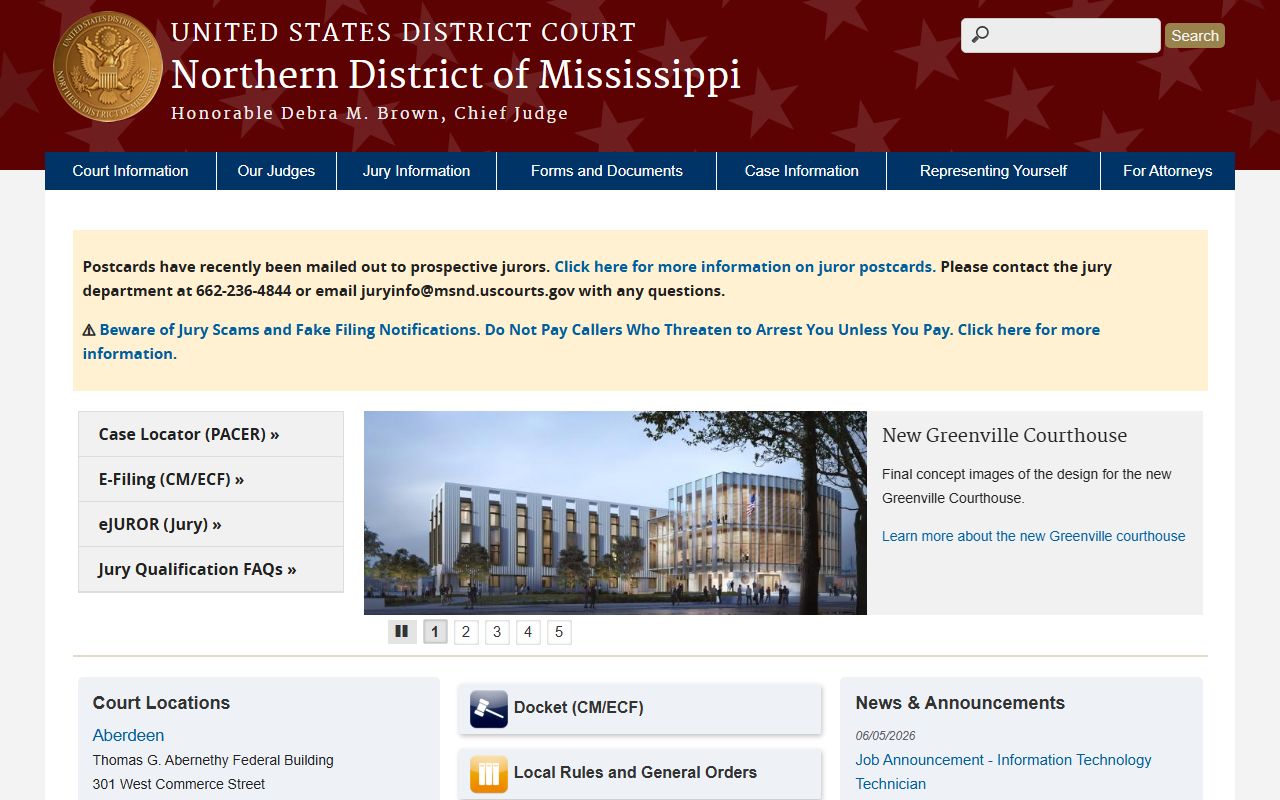
That homepage is for the federal system, not for estates. Nothing on it opens, searches, or closes a Quitman County probate case, which stays entirely with the Chancery Clerk in Marks.
Quitman County does fall inside this federal district for the few matters that belong there. The court groups its counties into divisions, and the official Northern District county division map places Quitman County in the Oxford Division.
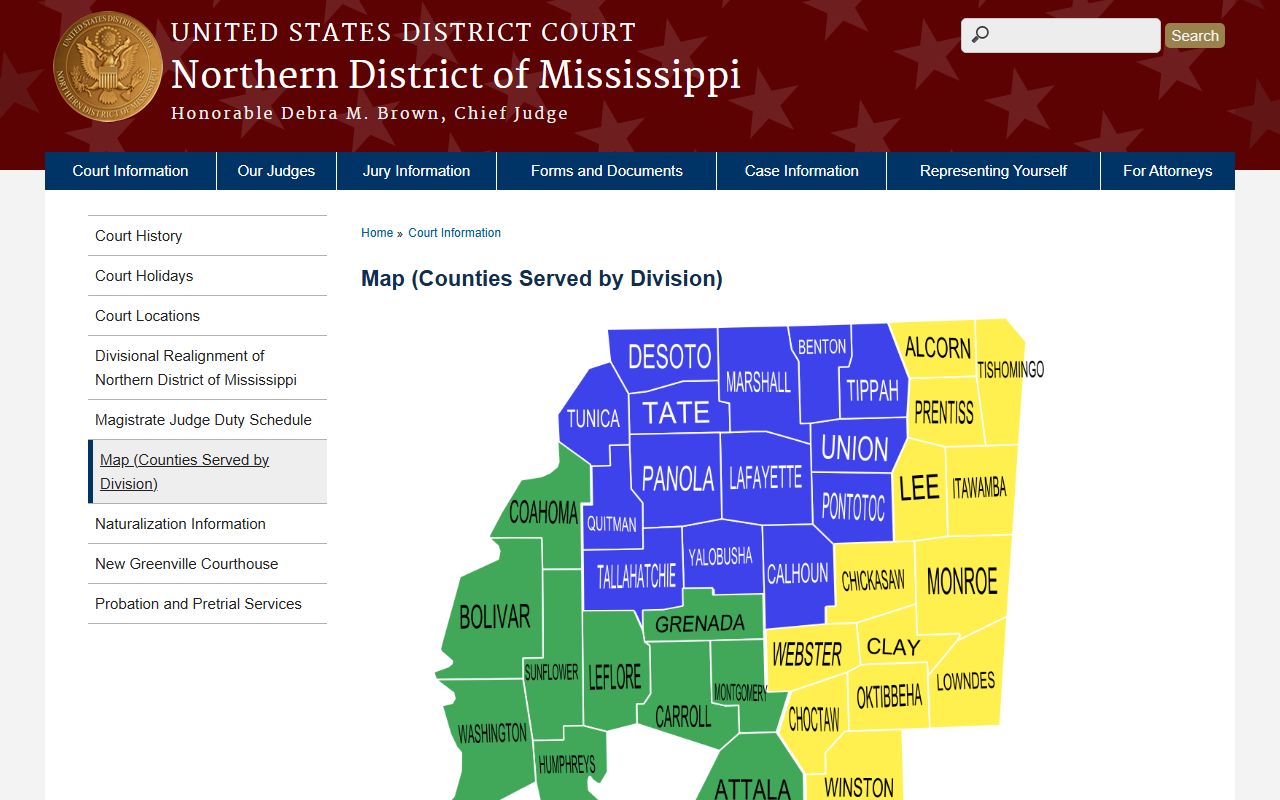
Being in the Oxford Division only matters for federal cases. A will, a guardianship, or an estate accounting from Quitman County is still filed and searched at the Chancery Court, not in Oxford.
Federal records also use a different search tool. State estate files run through the Chancery Clerk or PAMEC, while federal dockets run through PACER, as the Northern District case information page explains.
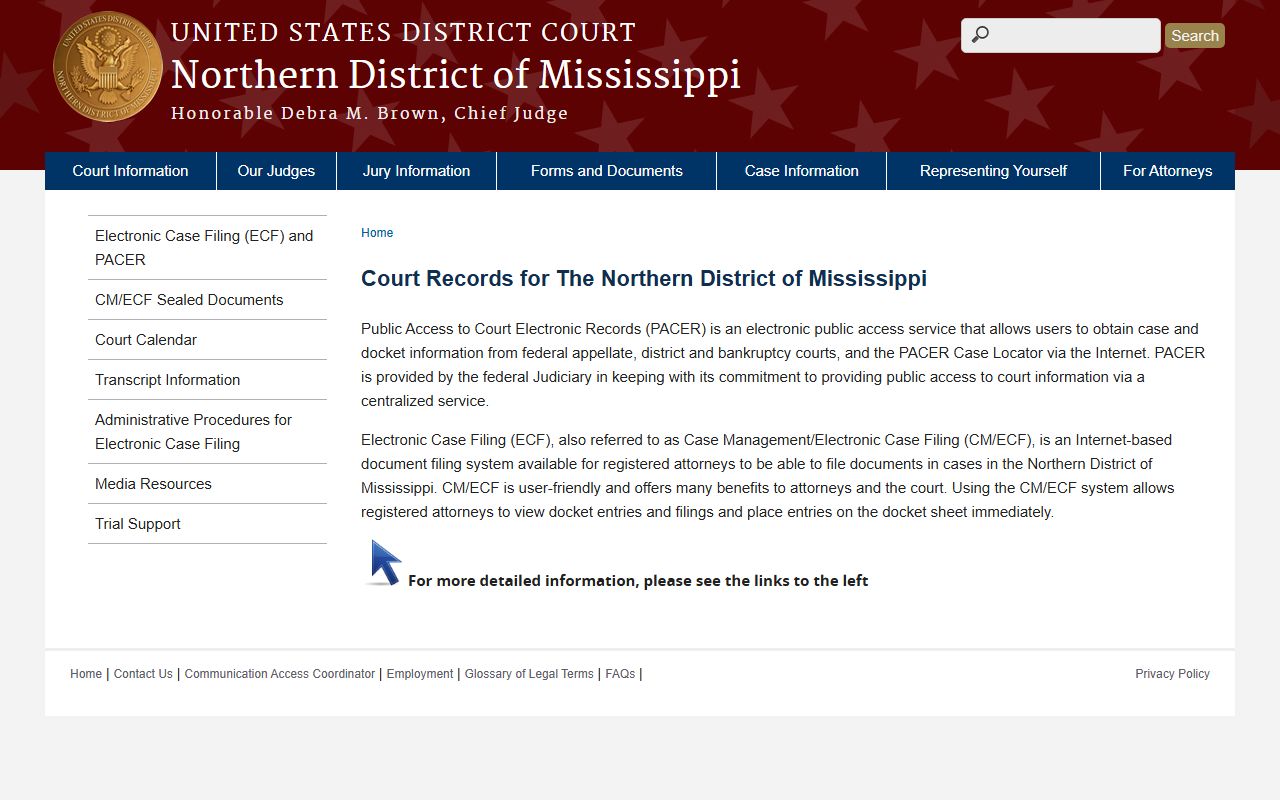
PACER will never show a Quitman County probate file. For a will, an estate, a guardianship, or a conservatorship, the Chancery Clerk and the statewide MEC system are the correct channels. The same clerk window also handles divorce and other family files, covered on the county marriage and divorce records page.